Silhouette of Botanical Flower Drawings: A Practical Guide to Choosing and Using Digital Printable Coloring Books for Adults
If you have been browsing Amazon KDP for adult coloring book interiors or creative assets, you have likely come across the term Silhouette of Botanical Flower Drawings. At first glance, it seems straightforward—a collection of flower outlines ready to color, print, or adapt. But there is more beneath the surface, especially if you are considering this for your own KDP book, sublimation business, or craft project. Many people download a file, start working with it, and only then realize they overlooked something important.
This article walks through the most common mistakes people make when selecting, buying, and applying these botanical drawing collections. Whether you are a beginner putting together your first coloring book, a small business owner looking for versatile clip art, or a seasoned creator wanting to avoid wasted time and money, knowing what to check before you commit can save you frustration and deliver better results.
What Exactly Is a Silhouette of Botanical Flower Drawings Collection?
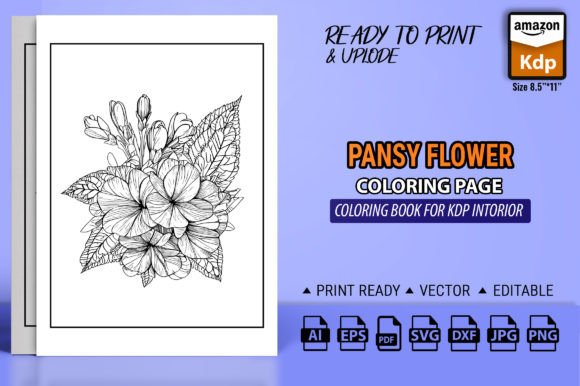
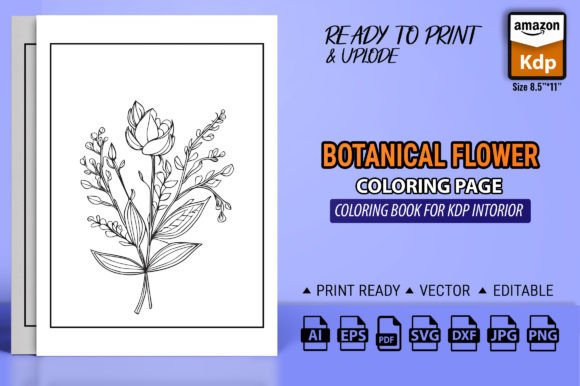
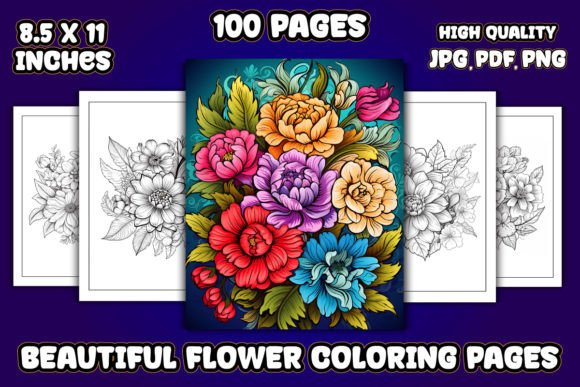
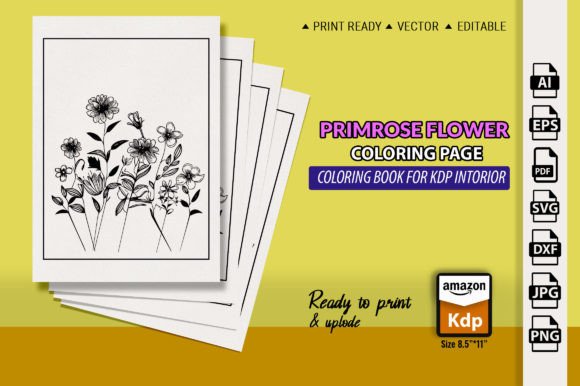
At its core, this is a digital collection of botanical flower illustrations rendered as silhouettes—clean, high-contrast outlines that work beautifully for coloring pages, design elements, or print-on-demand products. The format you are likely to encounter includes multiple file types such as AI, PDF, EPS, DXF, PNG, SVG, and JPG, all packaged in a ZIP file. The standard page size is 8.5 × 11 inches, which aligns directly with Amazon KDP trim sizes, making uploads straightforward.
But here is where many people get tripped up: not all silhouette flower collections are created equal. The quality of the vector lines, the complexity of the drawings, and the usability of the included file formats vary widely. A collection that looks gorgeous in a preview image may behave poorly when you try to edit it in Adobe Illustrator or scale it for a mug design. Understanding what to inspect before you buy or download can prevent those headaches.
Mistake #1: Ignoring the File Formats and Assuming All Are Interchangeable
One of the biggest advantages of a properly packaged silhouette collection is the variety of file formats. When you see a ZIP file containing AI, PDF, EPS, DXF, PNG, SVG, and JPG, it is tempting to assume you can just grab the PNG and be done. That works for some uses, but not all.
If you plan to edit the flowers—changing sizes, rotating elements, or combining them into new layouts—you need a vector format. AI or SVG are your best options for scalable editing in Adobe Illustrator or free software like Inkscape. EPS and DXF are helpful for CAD or cutting machines like Cricut or Silhouette, but they can lose stroke details if not exported carefully. PNG and JPG are fine for quick printing or previewing, but they rasterize the image, meaning you lose the ability to scale cleanly.
What to do instead: Open the AI or SVG file first and inspect the paths. Are the strokes clean? Are there unnecessary anchor points that will cause jagged edges when scaled? If the vector quality is poor, the other formats will inherit those flaws. Test one flower before you design an entire coloring page around it.
Mistake #2: Overlooking the Purpose—Coloring Book vs. Sublimation vs. Cutting
A silhouette botanical flower drawing set can serve multiple purposes, but each use case demands different file characteristics. For an adult coloring book interior, you need lines thick enough to color inside without bleeding through thin paper, but not so thick that they dominate the page. For sublimation on mugs or tumblers, you need transparent backgrounds (PNG with transparency or SVG) and high contrast. For cutting on vinyl or paper with a Cricut or Silhouette machine, you need DXF or SVG with clean, closed paths.
Many creators make the mistake of buying one collection and trying to force it into every application without adjusting the files. The result is a coloring page that prints with faint lines, or a mug design that cuts awkwardly because the paths were not closed.
A better approach: Decide your primary use before you purchase. If you are producing an adult coloring book for KDP, prioritize collections that show detailed, moderate-complexity outlines with consistent line weight. If you are making sublimation transfers, look for files with transparent PNGs already optimized for high contrast. If you need cutting files, confirm that the SVG or DXF has properly closed shapes—any gaps will cause the machine to misread the design.
Mistake #3: Not Checking the Line Complexity for the Intended Audience
Adult coloring books appeal to a wide range of users. Some adults want simple, calming silhouettes they can finish in 10 minutes. Others prefer intricate, highly detailed botanical drawings that take hours to complete. A collection labeled Silhouette of Botanical Flower Drawings might lean toward one style or the other, and the product description often does not state this clearly.
If you are publishing on KDP and your interior is too simple, buyers may feel it was not worth the price. If it is too complex for beginners, you may get returns or negative reviews from customers who expected something easier.
How to evaluate this: Look at the preview images closely. Count the number of petals, leaves, and internal lines on a single flower. If the silhouette is mostly a solid shape with minimal inner detail, it is best for relaxation or craft projects. If it has multiple layered leaves, intricate stem curves, and fine inner lines, it suits experienced colorists. Match your file choice to your target audience rather than assuming one size fits all.
Mistake #4: Forgetting to Test Print Before Uploading to KDP
Digital files look crisp on your screen. They can look completely different on paper. This is especially true for silhouette-style drawings where thin lines may disappear, or areas that appear separated on screen may bleed together in print.
One of the most overlooked steps is printing a test page at actual size. With an 8.5 × 11 inch file, you can print one page on standard letter paper and examine: Are the lines visible? Do small gaps between petals remain distinct? Will a colored pencil or marker fit inside the spaces without touching adjacent lines? For adult coloring books, you also need to consider whether the paper you intend to use (white or cream) affects the contrast of the lines.
Practical advice: Before you commit to the full book layout, pick three flowers from the collection, arrange them on one page, and print it on the paper type you plan to order. If the lines are too faint, you may need to increase stroke weight or choose a different collection. If the silhouette is too dense, consider simplifying the page layout to give each flower more breathing room.
Mistake #5: Assuming the File Is Ready to Use Straight from the ZIP
A common frustration buyers report is that the file inside a ZIP archive sometimes requires additional steps. The AI or EPS file may open with missing fonts (irrelevant here since botanical drawings rarely use text), or the layers may be grouped in a way that is difficult to edit. In some cases, the PNG may have a white background instead of transparency, which ruins its usability for sublimation or layered design work.
Even a high-quality collection like Silhouette of Botanical Flower Drawings may need a small amount of preparation. Opening the AI file and ungrouping the elements, or checking that the SVG paths export correctly, can take 10 minutes and save hours of rework later.
What to check first: Unzip the file and open the AI and SVG files in your preferred software. Verify that the flowers are on separate layers or at least easily selectable. If the PNG is the version you plan to use, open it and confirm the background is transparent. Some collections include a JPG for preview only, so do not assume all raster files are transparency-ready.
Mistake #6: Using the Same Design on Multiple Products Without Adjusting Scale or Resolution
The same flower silhouette that looks perfect on a coloring book page may need resizing or resolution adjustment for a pillow, mug, t-shirt, or sticker. A design intended for 8.5 × 11 inches at 300 DPI will have a specific pixel dimension. If you place it on a 12-ounce mug template without scaling, the flower might be too large or too small for the print area. If you use it for a t-shirt heat transfer, the line thickness that worked on paper may look too thin on fabric.
Better practice: Because you have vector formats available (AI, SVG, EPS), you can scale the silhouettes infinitely without losing quality. Use these formats for any product where size varies. For print-on-demand items, always check the template dimensions provided by the manufacturer, and adjust your design accordingly. A single flower from this collection that fits well on a greeting card may need to be duplicated or enlarged for a bedsheet or textile pattern.
For sublimation, remember that the design will appear reversed in the final product if you are working with certain transfer methods. Silhouette flowers that are symmetrical—like many botanical blossoms—work fine either way, but asymmetrical stems or leaves may look odd if mirrored unintentionally.
Mistake #7: Neglecting Licensing and Usage Rights for Commercial Products
When you purchase a digital printable botanical flower coloring book interior for KDP, you typically receive a commercial license that allows you to upload it as a book or use the designs on products. However, the exact terms vary. Some collections allow unlimited use across your entire product line, while others restrict the number of copies you can sell, or prohibit using the designs on certain merchandise categories.
This is rarely a problem with well-packaged KDP interiors, but if you plan to use the silhouettes for beds, pillows, mugs, stickers, sublimation templates, greeting cards, t-shirts, textiles, or cloth, double-check that your license covers each of those categories. Some sellers offer expanded licenses for physical merchandise and standard licenses for digital books only.
How to protect yourself: Read the product description carefully before purchase. Look for phrases like "commercial use allowed" and check if there is a cap on sales. If the license is unclear, contact the seller. For a collection that includes AI, PDF, EPS, DXF, PNG, SVG, and JPG plus a ZIP file, the seller has provided robust file support, which often indicates a professional approach to licensing. But never assume—when in doubt, choose a collection with clear, generous terms.
Putting It All Together: How to Get the Most from Your Botanical Silhouette Collection
A good Silhouette of Botanical Flower Drawings collection can serve you well across many projects—if you take a few deliberate steps at the start. Begin by identifying your primary use and audience. Open the vector file and inspect the line quality and path structure. Print a test page on your intended paper. Scale the design appropriately for each product. And verify your license covers everything you plan to do.
With the right preparation, these vector-based botanical drawings give you clean, scalable artwork that works for KDP interiors, sublimation crafts, cutting machine projects, and home decor items. The file formats included—AI, PDF, EPS, DXF, PNG, SVG, JPG, all in one ZIP—are designed to give you flexibility. But that flexibility only helps if you choose the right format for each task and inspect the content before you build an entire project around it.
Final thought: The difference between a frustrating experience and a smooth creative workflow often comes down to a few minutes of upfront checking. Test one flower. Confirm the file format. Match the complexity to your audience. Check the license. These small actions prevent wasted materials, lost time, and disappointing final products. Whether you are crafting a coloring book, designing a mug, or creating sublimation templates for your shop, the same principle applies: know your file, know your format, and know your end use before you start.